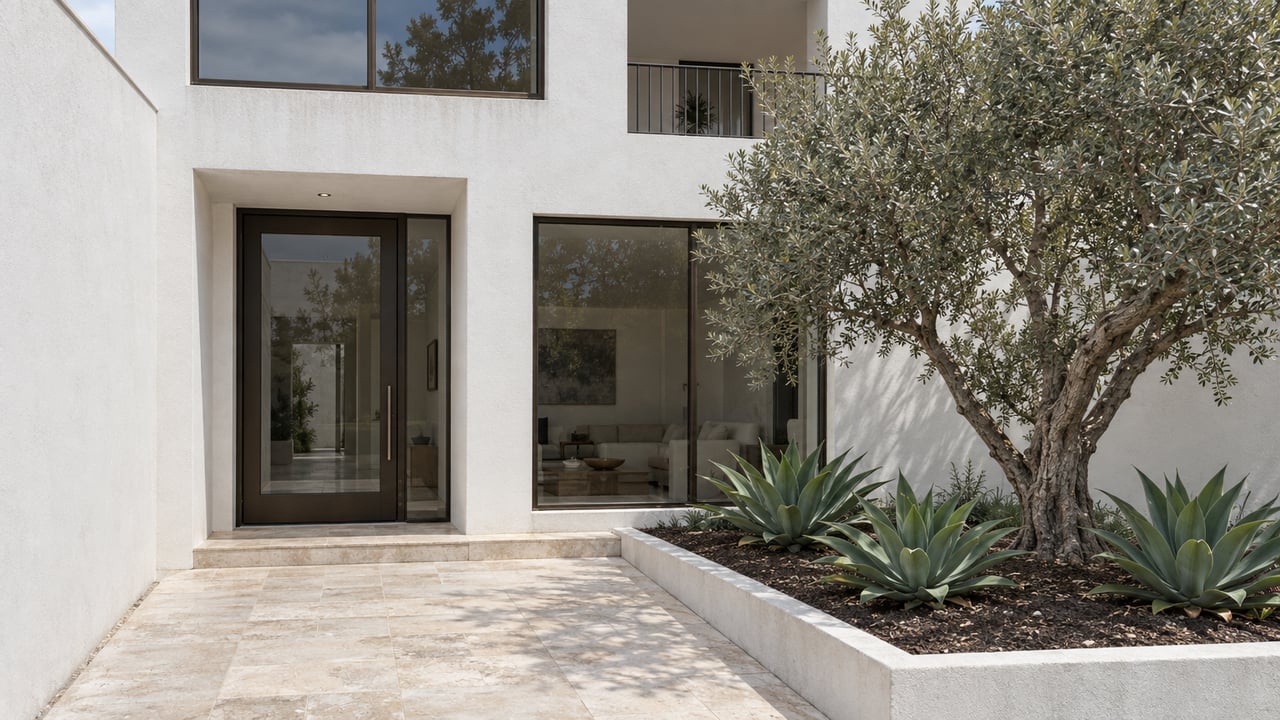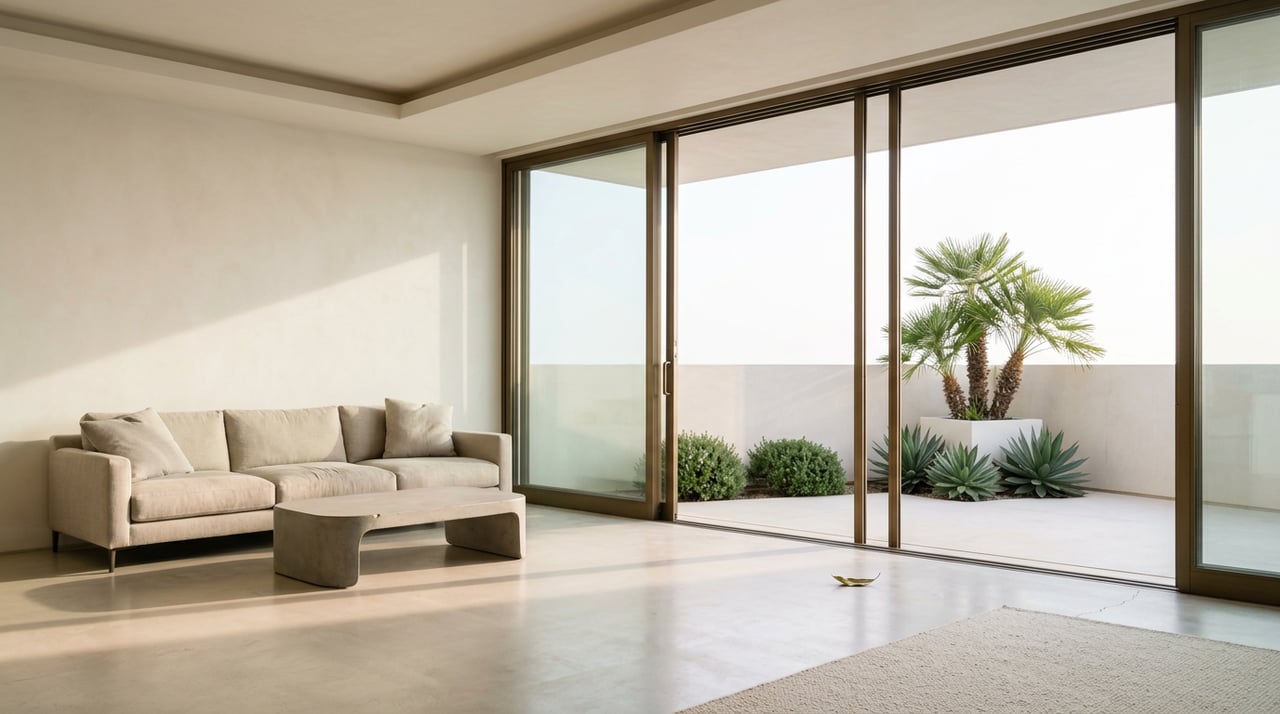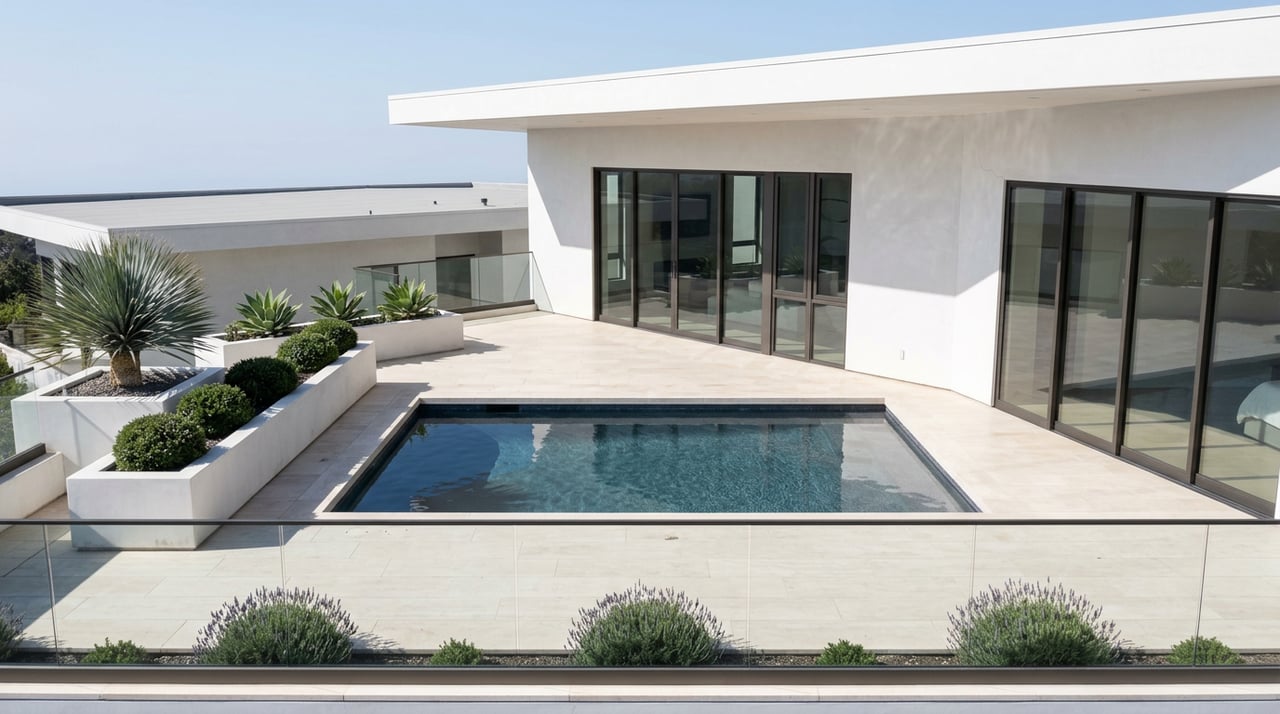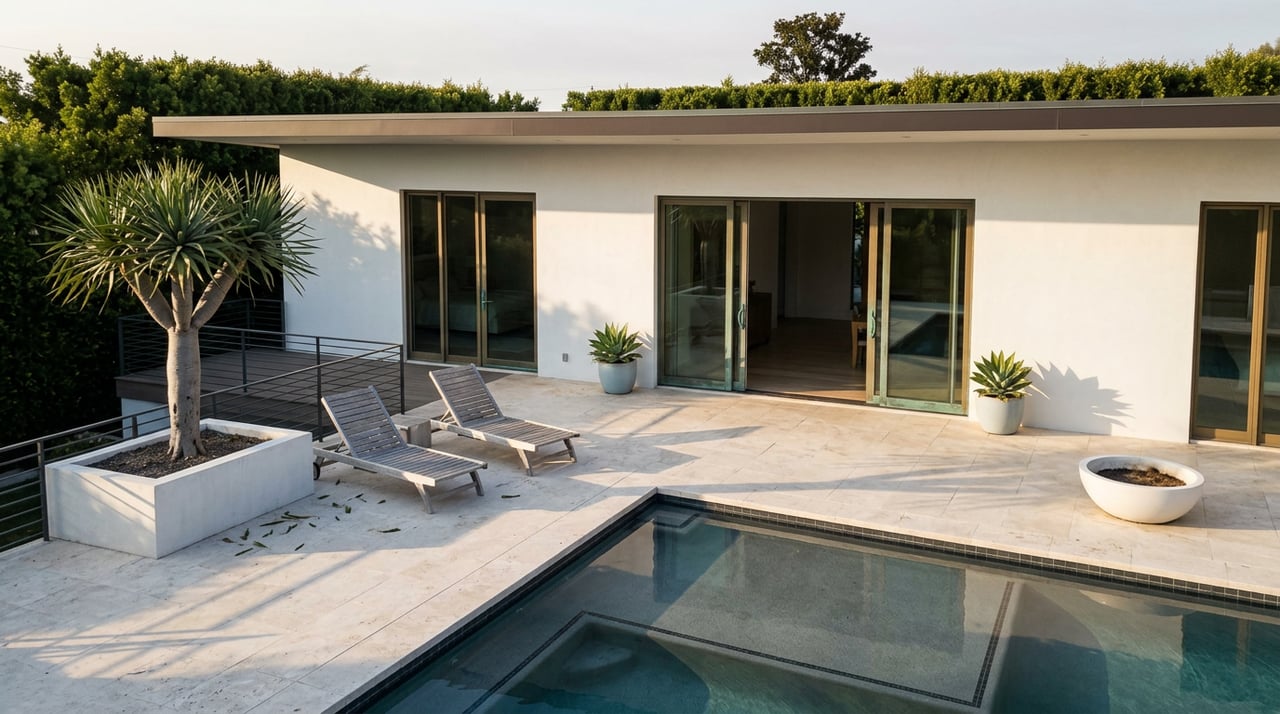
In May 2026, a beachfront home on Pacific Coast Highway in Paradise Cove sold for $35 million. A few miles inland, in Corral Canyon, a 1970s three-bedroom with ocean views closed at $1.325 million. Both are single-family homes. Both closed within the same three-month window. Anyone trying to read Malibu's market off a single median price would have to explain how both numbers belong to the same city, the same quarter, the same word: "Malibu."
They do, and the gap between them is the story.
A Median Is an Average of Two Different Markets
Headlines this year have circled a familiar figure: Malibu's median home price down somewhere between 13 and 20 percent year over year, depending on which portal you check. Read as a single data point, that looks like a broad discount, the kind of number that suggests the whole city got cheaper.
It didn't. In the second quarter of 2026, Malibu's median single-family sale price landed at $4,089,910, down roughly 15 percent from the same quarter in 2025. In the same quarter, the number of homes that sold more than doubled, and price per square foot barely moved. If the typical home were actually worth 15 percent less, the price-per-square-foot figure would have moved with it. It didn't, because the median wasn't measuring a discount. It was measuring a shift in which homes happened to close.
A median finds the middle of whatever set of transactions you feed it. When more entry-tier homes and fewer trophy homes close in a given quarter, the median drops even if no single property lost value. That's the mechanism behind Malibu's 2026 numbers, and it traces back to a specific geographic line the January 2025 Palisades Fire drew across the city.
Where the Fire Drew the Line
The City of Malibu's own count puts the number of single-family homes lost to the fire at roughly 532, concentrated in the older, more modest neighborhoods along the eastern end of the city and in the canyons. Western Malibu, from Point Dume through Zuma and Trancas, was largely spared.
That geography matters for reading every price figure that followed. The homes that burned tended to sit in Malibu's lower-priced tier. Once destroyed, those parcels don't reappear in home-sale statistics. They become land, priced and sold as a category of their own. So the properties dragging the median down aren't actually in the median at all. What's left in the home-sale figures skews toward the homes that survived, many of them in the pricier western half of the city and along premium stretches like Malibu Road, where sales have continued at levels that look nothing like a 15 percent haircut.
The Rebuild Lots Have Their Own Price Tag
The land market that emerged after the fire runs on entirely different economics than the home-sale market, and confusing the two is where a comparison shopper gets the story wrong.
In the second quarter of 2026, roughly 30 vacant lots sold across Malibu at a median of about $1.3 million, a range that stretched from modest inland parcels to multimillion-dollar coastal sites. A burned lot with 53 feet of direct ocean frontage on Las Flores Beach, at 20802 Pacific Coast Highway, came to market for nearly $5.7 million after its owners calculated that their insurance payout wouldn't come close to covering a rebuild. That listing sat for months, a pattern consistent with a June 2026 Realtor.com reading showing unbuilt land prices in Malibu up 15 percent year over year to $1.49 million even as the median price of an existing home fell 2.5 percent to $5.69 million over the same period.
Notice that those two figures, drawn from the same data set in the same month, tell a story that's the mirror image of the citywide median everyone quotes. Land got more expensive. Finished homes got a little cheaper. Neither of those movements is what a 20 percent citywide drop implies on its own.
Realtor.com senior economist Hannah Jones, describing the buyer pool for that kind of listing, put the friction plainly:
"Compliance is costly and permitting adds friction, piling on carrying costs and timeline risk."
That friction reshapes who buys. Financing is scarce because lenders are wary of construction risk on an unbuilt lot, which means land buyers skew toward cash. Insurance premiums in fire-affected zip codes rose 35 to 50 percent after the blazes, according to Redfin's post-fire analysis, adding another cost that a traditional mortgage-qualified buyer has to absorb before ground ever breaks. In late 2025, investors accounted for 44.2 percent of Malibu lot purchases in the 90265 zip code, more than double their 21.4 percent share the year before. That's not a discount for the typical family buyer. It's a market that's re-sorted itself toward parties who can pay cash and wait out a permitting timeline, under the city's Fast Track Rebuild Program that allows like-for-like reconstruction plus 10 percent additional square footage.
Reading Malibu in Three Tiers, Not One Number
A buyer comparing neighborhoods gets a clearer picture by treating Malibu as three separate markets rather than one median.
| Tier | What's actually selling | What the price signals |
|---|---|---|
| Premium and beachfront (Malibu Road, Paradise Cove) | Finished, move-in homes that survived the fire | Continued high-dollar closings; limited discount |
| Rebuild lots (Big Rock, Las Flores, eastern canyons) | Cleared parcels, insurance-driven sales | Land pricing, cash-heavy buyer pool, rebuild-cost math |
| Hillside benchmarks (Malibu Park, Corral Canyon) | Mix of hillside homes and land | Wide swings by portal; small sample sizes; longer days on market |
Even within that hillside tier, portals disagree sharply enough to make the point on their own. One reading put Malibu Park's typical home value near $4.6 million with a $5.2 million median list price. Another portal's median sale figure for the same pocket ran to $8 million, with only a handful of transactions behind it. That spread isn't a data error. It reflects how few homes are actually trading in that tier right now, and how much a single sale can swing a small sample. A buyer using any one of those numbers as a floor or ceiling is trusting a sample size that wouldn't hold up in a normal market.
What This Means If You're Comparing Neighborhoods
If Malibu is on your list alongside other South Bay or Westside communities, the citywide median is the least useful number available to you. It blends a land market moving one direction with a finished-home market moving another, and it treats a $35 million beachfront close the same as a $1.3 million canyon fixer.
The more useful questions are narrower. Is the specific listing land or a finished structure? If it's land, what does the insurance and permitting timeline actually cost before you compare it to a move-in home elsewhere. If it's a finished home, is it in a neighborhood the fire reached, or one it didn't? Price per square foot on comparable finished homes, not the citywide median, is the number that has actually held steady through 2026. Mortgage rates have stayed near 6.5 percent with no Federal Reserve cut expected until 2027, so financing costs aren't the variable moving these numbers. The composition of what's for sale is.
Frequently Asked Questions
Is Malibu a buyer's market right now? It depends entirely on which tier you're shopping. Rebuild lots have more listings than buyers and real leverage for cash-ready purchasers willing to run the permitting math. Finished homes in premium pockets like Malibu Road have shown far less give.
Why do different real estate portals show such different median prices for Malibu? Portals measure different things. Some track closed sales, others track active listings, and list price and sale price move independently, especially in a market with as few transactions as Malibu's hillside tier. A wide spread between portals is itself a signal that the sample size is thin.
What should I budget for if I'm considering a rebuild lot? Beyond the purchase price, factor in insurance premiums that have risen 35 to 50 percent in fire-affected areas, financing that will likely require cash given lender caution around construction risk, and a permitting timeline that Malibu's coastal building standards can extend well beyond a typical build schedule.
Comparing neighborhoods on price alone rarely tells the full story, and Malibu right now is a case study in how misleading a single number can be. If you're weighing Malibu against Manhattan Beach, Hermosa Beach, or another South Bay community and want the financial picture behind the headline figures, Lisa B Realty can walk through what a specific property, lot, or neighborhood actually means for your numbers. Get My Valuation to start with a clear read on where you stand.