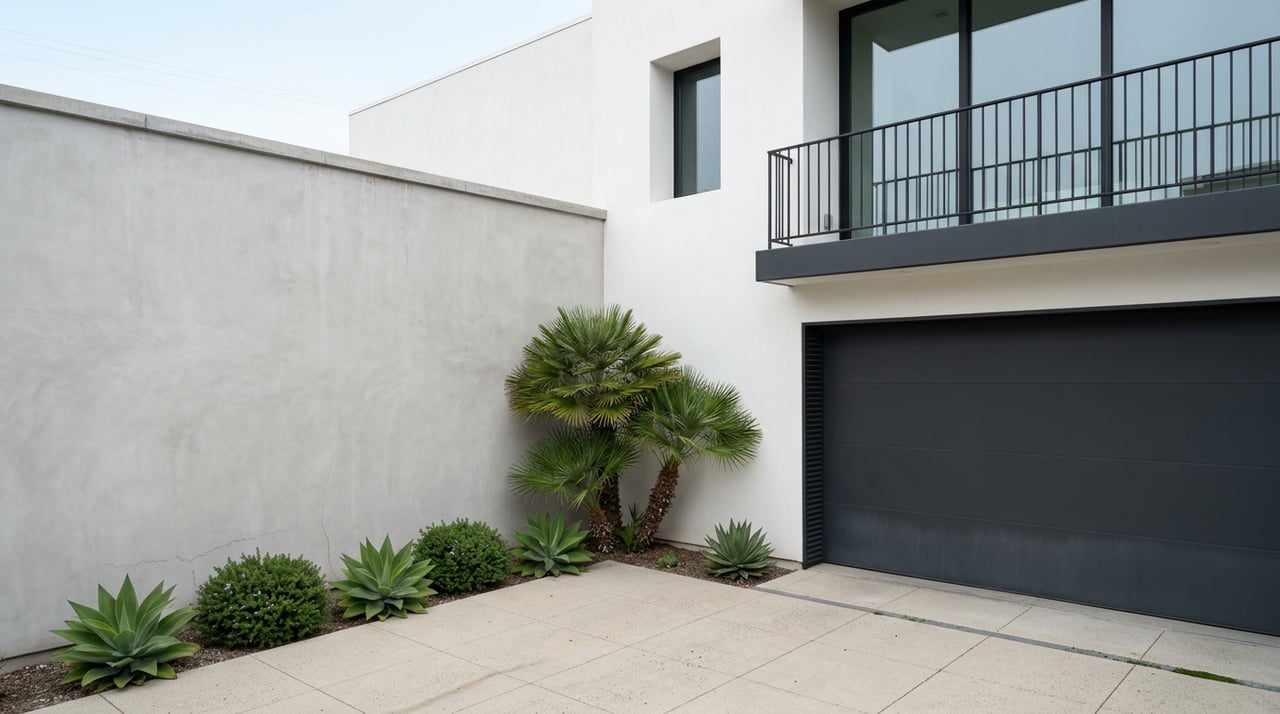
A buyer closes on a small lot behind Hermosa Avenue, the kind with a worn 1960s bungalow and a lot line that barely clears 2,700 square feet. The offer took three rounds and came in over asking. The buyer exhales, assuming the hard part is over.
It isn't. In Hermosa Beach, the property you can see in a listing photo is only half the deal. The other half sits below grade, in the Coastal Zone boundary lines, and in a public right-of-way permit file that has nothing to do with square footage or finishes. Buyers who plan to remodel, add a story, or tear down and rebuild are underwriting a bid war when the real cost sits in the twelve to eighteen months that follow closing.
A Deadline That Already Closed on Every Buyer Today
If you're buying now, in the second half of 2026, you missed a window that mattered. The City of Hermosa Beach adopted the 2025 California Building Standards Codes effective January 1, 2026, and the vesting cutoff for the prior code cycle was December 31, 2025 at 11 a.m. A project only locked in the older code if a complete building permit application, full plan set, and paid plan review fees landed at the counter before that hour. Anyone who wasn't in the queue by then is now designing to the current code, full stop. There's no retroactive path back.
That single administrative fact reshapes how a buyer should think about a fixer's timeline. The seller's old plans, if any exist, may already be obsolete. A buyer who assumes they can pick up a half-finished permit application from a previous owner and move straight to construction is assuming a code cycle that no longer applies to their project.
The Lot Size Number That Actually Drives the Budget
Hermosa's defining constraint isn't the ocean. It's the lot. The typical parcel runs around 2,700 square feet, and plenty of walk-street and Strand-adjacent lots come in smaller. The city's lot coverage formula rewards the smallest parcels and penalizes the rest: lots of 2,100 square feet or less get a 70 percent coverage allowance, and coverage drops as the lot grows. That inversion surprises buyers who assume a bigger lot buys more house. In Hermosa, it often buys less flexibility relative to size, because the percentage allowance shrinks just as the buyer starts pricing out a bigger footprint.
Layer onto that nearly the entire city sitting inside the Coastal Zone, with Exposure D wind loading applying from the Strand to Pacific Coast Highway. That's not a design footnote. Exposure D governs structural wind calculations on every new build and major addition in Hermosa, which means the engineering, not just the architecture, has to account for a wind zone most inland buyers have never designed against.
What's Actually Underneath the Lot
The city's own Building & Safety Division states plainly that the local high water table can cause basement flooding, with groundwater in some areas sitting just six to fifteen feet below grade. A geotechnical report is required before construction begins on affected sites, not as a formality but because the ground itself is unpredictable close to the sand.
This isn't theoretical. A California Coastal Commission staff report on a Hermosa Beach duplex built over a partial basement flagged that the fully subterranean level "may be at additional risk of groundwater encroachment and flooding," and required the owner to formally waive rights to future shoreline protection as a condition of approval. That finding predates the current permit cycle, but the underlying groundwater condition it describes hasn't changed, and it's the same condition the city's Building Division still cites today. The Commission's message was blunt: build the basement if you want, but the ocean's water table is not the city's problem to solve for you later.
For a buyer evaluating a teardown or a deep remodel that adds a basement level, that geotechnical report and its Coastal Commission review aren't a box to check. They're a variable that can add months and can eliminate a basement from the plans entirely if the soil report comes back unfavorable.
The Walk-Street Tax
Walk streets carry an additional layer that flat, alley-fronting lots don't. Municipal code defines a walk street as one designed for pedestrian use, where vehicle access to the property comes solely from an alley in back. That definition sounds quaint until a contractor has to figure out how to get a dumpster, a crane, or a lumber delivery to a site with no street frontage a truck can reach.
Local building contractors treat this as a serious line item, not an afterthought. When they bid a Strand or walk-street lot, the staging and access logistics get their own plan, because those constraints shape the construction schedule as much as the architectural drawings do.
Recent Coastal Commission filings show how far this extends into the property itself. A 2026 filing for a residence on 8th Street involved a roughly 660-square-foot private encroachment into the public walk-street right-of-way, tied to a wall, gate, and patio the owner wanted to keep. The Commission's approval came with conditions: a five-year authorization limit, a required deed restriction, and a finding that the walk-street corridor is a protected public view shed toward the shoreline, meaning any future work there gets scrutinized for whether it blocks that view. A separate 2026 filing for a property spanning 25th Street and Palm Drive, on a 3,082-square-foot lot, involved an 8-foot by 80-foot encroachment area the owner had used as a patio for years under the city's encroachment permit program, plus new curb, gutter, sidewalk, and a new sewer lateral as off-site conditions of the rebuild.
None of this is unique to one address. It's how Hermosa's walk-street and Strand parcels function structurally. If a fixer sits on one of these lots, the buyer isn't just purchasing a house. They're purchasing a five-year renewable relationship with the city and the Coastal Commission over how much of the public right-of-way they get to keep using.
The Timeline a Buyer Should Actually Underwrite
Local contractors who work Hermosa regularly put new-build timelines at 40 to 78 weeks from signed contract to certificate of occupancy. That's not a typo covering a wide range for no reason. A flat, tight infill lot with no Coastal Commission hearing and a motivated owner lands near the low end. A hillside lot requiring a soils report, a Coastal Development Permit hearing, and an Edison electrical service upgrade lands near the high end, and Edison panel upgrades alone commonly run 8 to 14 weeks from utility application to energization.
| Project type | Typical timeline (contract to C of O) | What drives the range |
|---|---|---|
| Flat infill lot, no CDP hearing | 40-50 weeks | Fast plan check, no Commission review |
| Walk-street or Strand lot with encroachment | 50-65 weeks | Access logistics, encroachment permit renewal terms |
| Hillside lot with basement or soils work | 65-78 weeks | Geotechnical report, CDP hearing, Edison upgrade |
Add the fact that the city's permit counter at 1315 Valley Drive is only open for submittals during two windows a day, 7 to 8:30 a.m. and 4:30 to 6 p.m., Monday through Thursday, and even the administrative front door to this process moves at its own pace.
Why This Changes How You Should Price the Bid
Here's where the timeline stops being a contractor's problem and becomes a buyer's financial one. Local sales data for the first half of 2026 shows 83 homes sold in Hermosa Beach, up more than 12 percent from the same period in 2025, with the average sale price climbing to $3.42 million, an increase of just over 10 percent year over year. Single-family homes sold in an average of 26 days, while condos and townhomes took closer to 51. About a third of homes sold above asking price, but 43 percent sold below list, which tells you buyers are willing to pay a premium for a home that's ready to live in and quick to punish one that isn't priced for what it actually is.
That split matters enormously for a fixer buyer. A turnkey single-family home moving in 26 days reflects a market rewarding speed and certainty. A fixer or teardown candidate is competing in the same bidding pool, but the buyer who wins it is signing up for the 40-to-78-week timeline above before they get a certificate of occupancy, plus geotechnical and Coastal Commission variables that a turnkey buyer never touches. Overpaying for a fixer as if it were a fast close is the single most common way South Bay buyers erase the value they thought they were capturing at the sand.
The Real Question to Ask Before You Bid
The question worth asking isn't whether a Hermosa Beach fixer is worth buying. Plenty are. The question is whether the price on the table already accounts for a code cycle that reset in January, a lot coverage formula that penalizes bigger footprints, a groundwater condition that can force a redesign, and a walk-street or encroachment history that comes with its own five-year clock. A buyer who prices the property as if the hard part ended at closing is the buyer most likely to be surprised at month fourteen.
If you're weighing a Hermosa Beach fixer, teardown, or walk-street lot and want a second read on what the numbers actually support before you write an offer, Lisa B Realty combines a licensed California REALTOR® perspective with CPA-level financial analysis, the kind of dual lens this market rewards. Get My Valuation and let's look at what the property is really worth once the full timeline is on the table.